

Next. Proven at scale.
They do not break stride. That is the product.
Australia operates some of the world's largest autonomous mining and heavy-haul systems, today. Driverless haul trucks move ore on private roads, and Rio Tinto's AutoHaul trains cross the Pilbara with around 28,000 tonnes of iron ore and no driver onboard. These operations succeeded because they earned trust operationally, over years. The next generation of autonomy, more capable and more general, will not get years. It will need to prove its boundaries from day one.
PEC-1 puts speed, zone, separation, and movement-authority policy at the drivetrain and the brake, below the autonomy stack, so protected command paths remain within policy even when upstream software faults or the model makes an error. The proof is a person crossing in front of a stopped autonomous truck without breaking stride: stop authority as a physical property of the machine, not a behaviour of its software.
What PEC-1 enforces here
Speed and zone policy. Hard operational limits enforced at the point of effect, with separation held between machine space and human space.
Movement authority. Rail-style authority discipline generalised: motion happens only under a signed, current grant.
Fleet evidence. Every protected movement decision is recorded to the Trust Ledger, so one supervisor can oversee a yard of machines on evidence rather than trust.
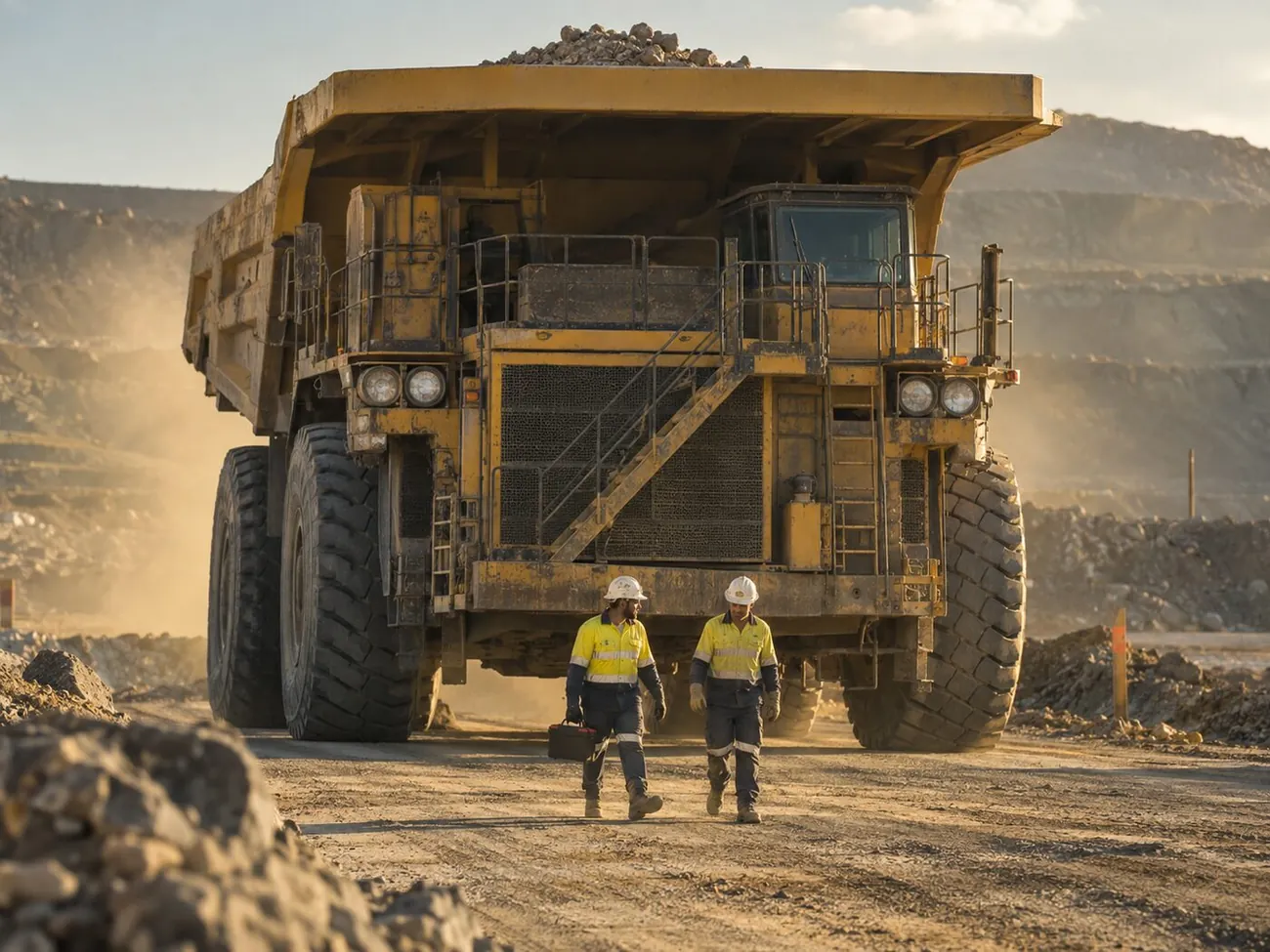

Mining bridges to on-road automotive at the turn of the decade. The operators who can show hardware-enforced boundaries will be the ones regulators let move first.